

From Mars to Bennu: How Lassonde is Contributing to Canada’s Space Sector
Tags:
World Space Week offers us a chance to look up, but some of the technologies helping scientists understand what lies beyond Earth are being developed and tested much closer to home.
At Lassonde School of Engineering, researchers and students are working across space science and engineering, from planetary exploration and satellite navigation to robotics, Earth observation and technologies designed to support human health and food production in space.
That work is part of a space research legacy at York that stretches back more than 60 years. Today, York ranks first in Canada and 30th globally for Aerospace Engineering in the 2026 ShanghaiRanking Global Ranking of Academic Subjects.
A track record that reaches into space
York researchers have contributed instruments for major international space missions.
In 1991, Wind Imaging Interferometer (WINDII), developed at York, was launched aboard NASA’s Upper Atmosphere Research Satellite to study winds in Earth’s upper atmosphere.
In 2008, a LIDAR system developed by York scientists travelled to Mars aboard NASA’s Phoenix lander, gathering information about the planet’s atmosphere and weather.
York researchers led the development and operation of the OSIRIS-REx Laser Altimeter (OLA), which mapped the surface of asteroid Bennu and helped inform the mission’s selection of a sample collection site. The spacecraft successfully returned a sample from Bennu to Earth in 2023. This work was extended to a new mission, OSIRIS-APEX, which will rendezvous with asteroid Apophis in 2029.
Currently, the third York-led experiment on the International Space Station (ISS), HomeBase, is underway, scheduled to end in 2031. This experiment will examine how astronauts adapt to changing environments and how their sense of movement and orientation changes throughout a space mission. Previous ISS missions included Bodies in the Space Environment (BISE) in 2009/2010 and Vection, between 2018 and 2023.
These projects form part of a long history of collaboration with organizations including the Canadian Space Agency, European Space Agency and NASA, as well as Canadian and international industry.
Building technologies for the next generation of exploration
That work continues today across several disciplines at Lassonde.
Researchers are advancing technologies for satellite navigation, planetary exploration, autonomous robotics and space communications, while others are exploring challenges associated with sending humans farther from Earth, including health monitoring and food production during long-duration missions.
Some of this work can be tested without ever leaving campus. Lassonde’s Canadian Planetary Simulator enables researchers and students to recreate aspects of planetary environments and test instruments and technologies under conditions they could encounter beyond Earth.
Other projects supported by the Canadian Space Agency are working to broaden participation in Canada’s space sector and create opportunities for students from groups that have historically been underrepresented in space-related fields.
Preparing the next generation
Research is only part of Lassonde’s connection to space.
York’s Space Engineering program celebrates its 25th anniversary this year, providing students with specialized education spanning areas such as spacecraft systems, communications, sensing, control and mission design.
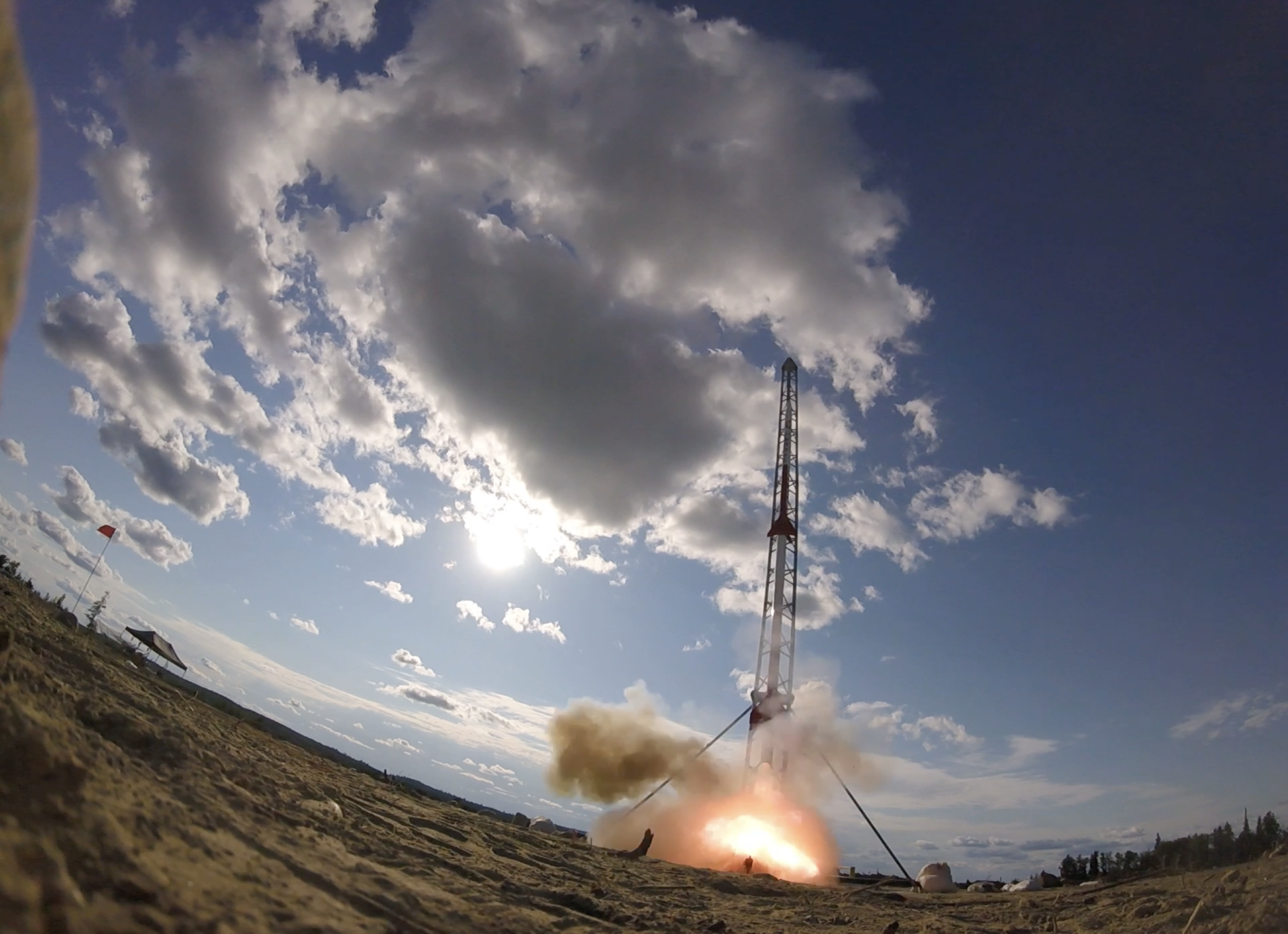
Students can also take what they learn beyond the classroom through research, fieldwork, industry experiences and design competitions. That includes Lassonde’s Arbalest Rocketry team, which is putting this year’s World Space Week theme, Rocket Revolution, into action. The team recently achieved a record result at Launch Canada, a national competition challenging university teams to design, build and launch high-powered rockets.
Graduates have gone on to careers across Canada’s space and technology sectors, including roles in government, academia and companies working in areas such as satellites, Earth observation, communications and advanced technologies.
From instruments that have travelled to Mars and an asteroid millions of kilometres from Earth to technologies now being developed for future missions, York’s contributions to space have evolved considerably over six decades. What has remained constant is the opportunity for researchers and students to help tackle some of the challenges involved in understanding Earth and exploring beyond it.