

Civil Engineering
Bachelor of Engineering (BEng)
Accredited by the Canadian Engineering Accreditation Board
Design the systems and structures that shape everyday life
Entry in: Fall and Winter
83% of co-op students
gain employment shortly after graduating
*Based on a 2025 survey of recent graduates
Program overview
Imagine designing the places where we live, work and connect. As a Civil Engineering student at Lassonde, you’ll join a community who’s driven to make a difference. It’s a place where you don’t just study engineering, you experience it together.
You’ll explore how transportation networks, water systems and other essential infrastructure are planned, built and maintained, while learning how new technologies, innovative materials and sustainable solutions are shaping smarter communities.
Beyond the classroom, learning comes to life through projects, collaborative spaces and a supportive community of peers. Faculty incorporate innovative approaches like gamified VR experiences, where you can strengthen your engineering skills in immersive environments that feel more like a video game than a traditional lab. Whether piloting virtual drones or taking on design challenges, you’ll learn through active exploration.
With flexible co-op opportunities, you can gain hands-on experience that aligns with your interests while building the knowledge employers are looking for. Along the way, you’ll become more confident, expand your network and discover the many directions your engineering career can take.
Why Civil Engineering at Lassonde
Exclusive access to emerging construction technology
You won’t have to wait until after graduation to gain experience using the technology used by today’s professionals. With access to modern, continually evolving equipment and specialized software, you’ll build hands-on experience with the tools shaping the future of civil engineering and gain skills that can give you a competitive edge.
Engineering Block Model option
You can choose to start your journey in the Engineering Block Model, a first-year experience built to support both your learning and your sense of belonging. Instead of balancing 5–6 courses at once, the Block Model lets you focus on fewer subjects at a time. You’ll take one intensive course alongside a longer-term course, completing a course every few weeks.
Make your mark through undergraduate research
Expand your learning through research opportunities that allow you to collaborate with researchers and contribute to new discoveries. Develop your research expertise through the Natural Sciences and Engineering Research Council Undergraduate Student Research Awards (NSERC USRA), the Lassonde Undergraduate Research Award (LURA) and Research at York (RAY).

Hands-on learning & lab experiences
CD3 Facility
The Climate-Data-Driven Design Facility is a research space where engineers test how real weather conditions like heat, rain, snow and humidity affect infrastructure materials over time. It combines outdoor field testing, advanced sensors and full-scale experiments that replicate real-world conditions.
High Bay Lab
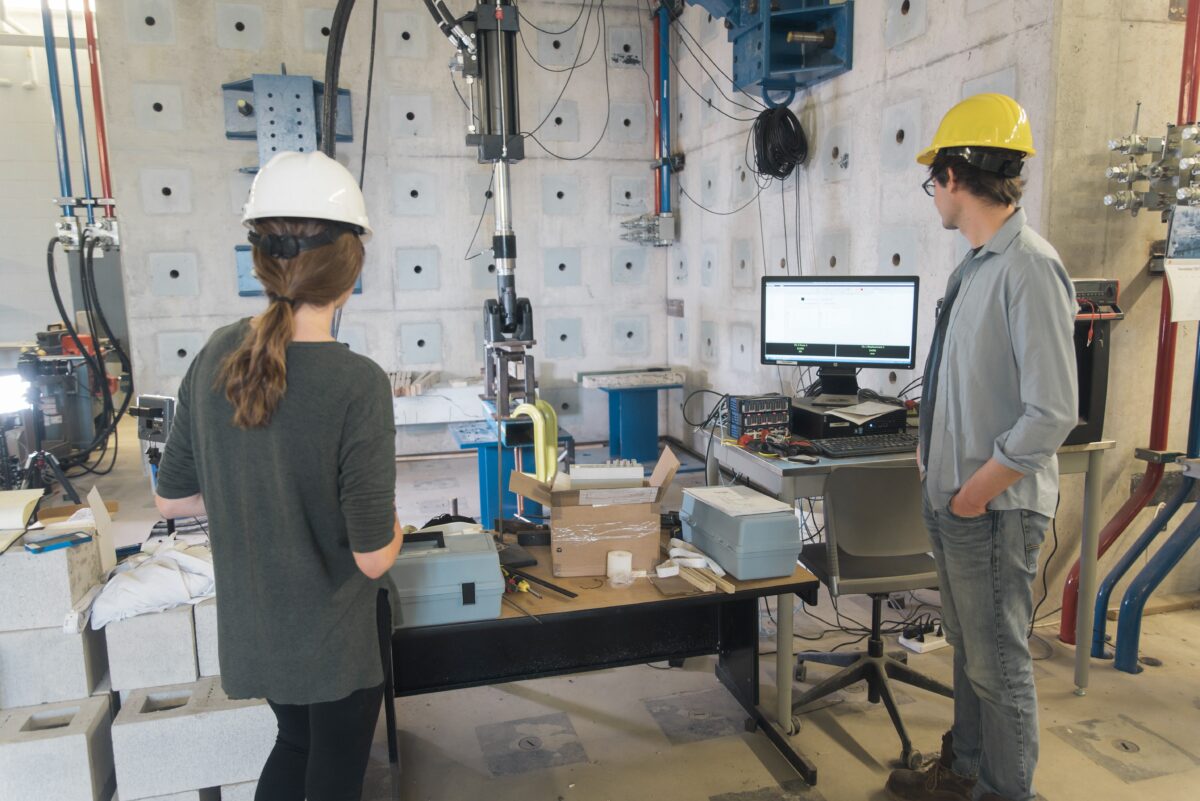
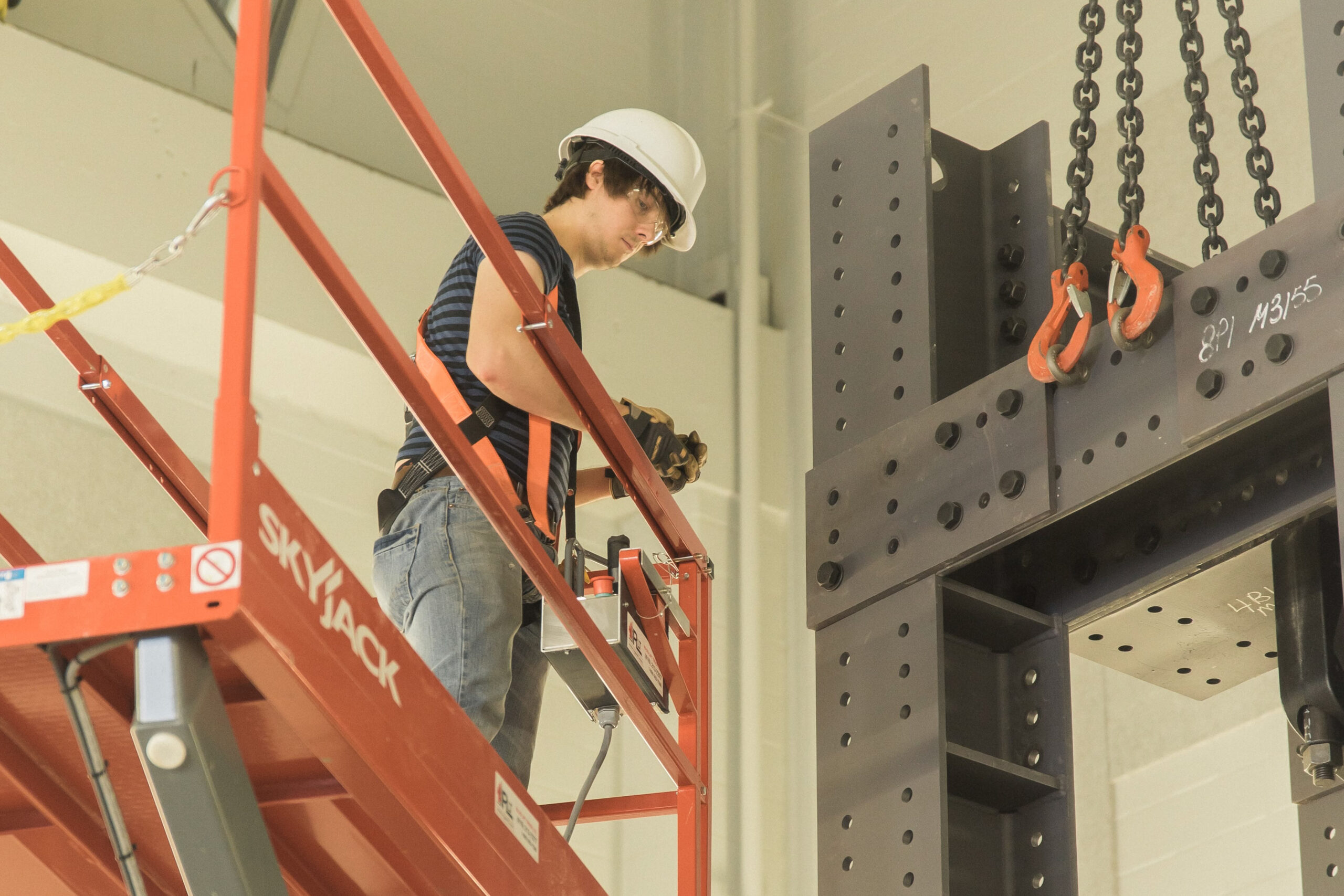
The High Bay Lab is a multi-storey structural testing facility designed for large-scale materials and structural research. Built to withstand earthquake-level forces, the lab features a metre-thick floor, vibration-controlled walls and professional-grade testing and prototyping equipment, including a 12.5-ton overhead crane.
The Sandbox
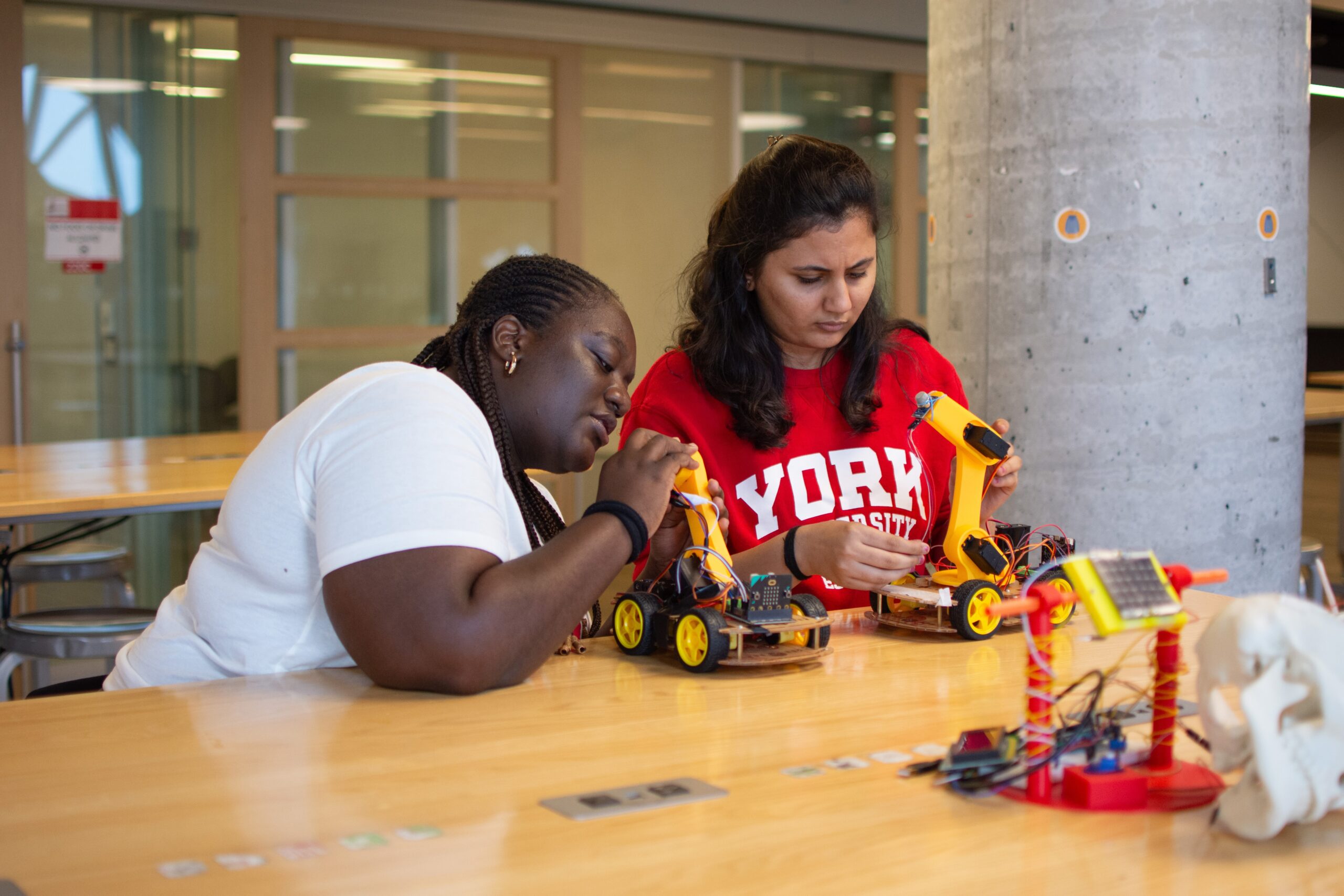
The Sandbox puts students at the center of hands-on creation and collaboration. With access to tools like 3D printing, laser cutting and dedicated team spaces, students can quickly prototype, test and refine ideas. It’s an environment built for experimenting, building and learning.
All the projects that you work on will be related to something tangible. If you’re interested in cities, how they operate and how we can make a positive impact in people’s lives, I think Civil Engineering is the right discipline for you.
— Professor Usman Khan, Civil Engineering, Lassonde School of Engineering, York University

Work-integrated learning
Gain industry experience with paid work terms
Through Lassonde’s co-op program, co-op work terms begin after your second year, with students applying in year two. This makes first year an important time to build your academic foundation and technical skills.
From there, you’ll take on paid work terms across technology, finance, public service, research, and other areas where software engineering plays a key role. With flexible 4, 8, or 12-month placements, you can tailor your experience to your goals while building in-demand skills, growing your network, and exploring what excites you most about your future career, all while being supported at every step.
Notable co-op employers
- The Regional Municipality of York
- ART Engineering Inc.
- Ontario Transit Group
- AllRock Consulting Ltd.
- Bantrel Co.

500+

An average of $26/hr
Co-op employers
Work around the world
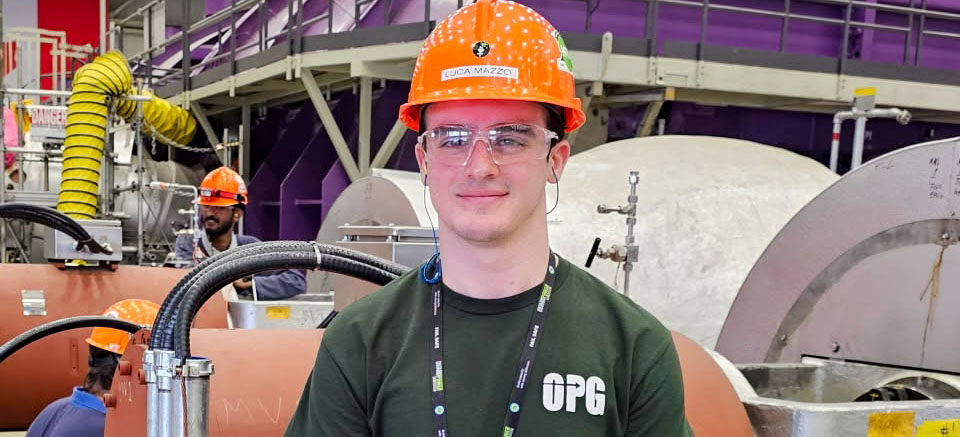
Launch your career in Civil Engineering
In demand across every industry
Graduates of our program have gone on to build careers across all sectors, including healthcare, finance, government, transportation, manufacturing and tech.
Where our grads work
Amazon
Area manager, project coordinator
Halton Region
Project manager, project coordinator
AMD
Software developer, design engineer
Alliance Verdi Civil
Project engineer, project coordinator
Bruce Power
Project coordinator, project engineer
Toronto Hydro
Electrical engineer, applied machine engineering, project coordinator
Why this career is future-proof
As a future civil engineer, you’ll be entering a field with strong long-term demand. With 30% of Canada’s civil engineering workforce aged 50 or older and approaching retirement, the need for skilled professionals continues to grow. As emerging technologies like artificial intelligence reshape the industry, you’ll be well positioned to solve complex challenges, drive innovation and help build the communities of tomorrow.
Learn from exceptional faculty
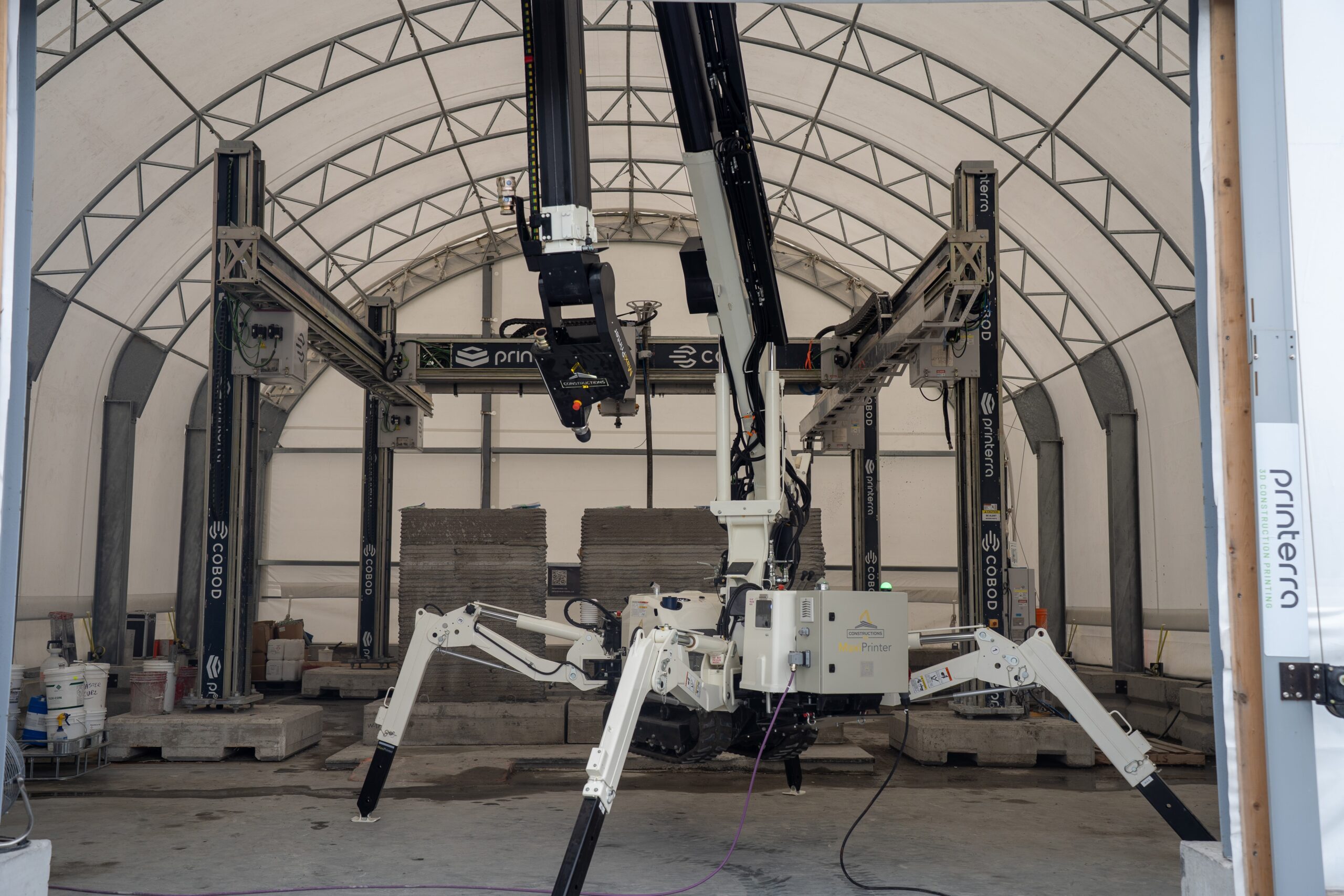
Through projects, mentorship and collaboration, you’ll explore ideas and systems shaping the future of technology. Learn from faculty working on real-world challenges, from improving access to safe drinking water in remote Arctic communities with Professor Stephanie Gora, to using VR and drones to transform engineering learning and practice with Professor Mojgan Jadidi and advancing more sustainable construction through 3D-printed concrete with Professor Liam Butler.
Important information for applicants
Course details
Sample First-Year Schedules
Civil Engineering (B.Eng)
Year One Common Core
Fall Term
• Class • Lab • Tutorial
Mon
Applied Linear Algebra
Computational Thinking Through Procedural Programming & Mechatronics
Engineering Mechanics
Engineering Mechanics
Tues
Applied Calculus I
Renaissance Engineer 1: Ethics, Communication & Problem Solving
Wed
Applied Linear Algebra
Computational Thinking Through Procedural Programming & Mechatronics
Engineering Mechanics
Thurs
Applied Calculus I
Computational Thinking Through Procedural Programming & Mechatronics
Renaissance Engineer 1: Ethics, Communication & Problem Solving
Fri
Applied Linear Algebra
Engineering Mechanics
Engineering Mechanics
Civil Engineering (B.Eng)
Year One Common Core
Winter Term
• Class • Lab • Tutorial
Mon
Applied Calculus II
Electricity, Magnetism and Optics for Engineers
Chemistry and Materials Science for Engineers
Discrete Mathematics for Engineers
Tues
Chemistry and Materials Science for Engineers
Renaissance Engineer 2: Engineering Design Principles
Object-Oriented Programming & Telemetry as Engineering Cornerstones
Wed
Applied Calculus II
Electricity, Magnetism and Optics for Engineers
Discrete Mathematics for Engineers
Discrete Mathematics for Engineers
Thurs
Chemistry and Materials Science for Engineers
Electricity, Magnetism and Optics for Engineers
Renaissance Engineer 2: Engineering Design Principles
Fri
Applied Calculus II
Electricity, Magnetism and Optics for Engineers
Electricity, Magnetism and Optics for Engineers
Chemistry and Materials Science for Engineers
Object-Oriented Programming & Telemetry as Engineering Cornerstones
Looking for more? Browse upper-year courses and see the full list of program requirements.
Connect with Us
Join a community of change makers. Join Lassonde.