

Space Engineering
Bachelor of Engineering (B.Eng.)
Accredited by the Canadian Engineering Accreditation Board
From satellites to spacecraft, design the future of navigation and communication
Entry in: Fall or Winter
One-of-a-kind
Canada’s only Space Engineering degree
Program overview
If you’re fascinated by satellites, spacecraft and the future of space, Space Engineering lets you turn that curiosity into real-world innovation. You’ll combine engineering, robotics, electronics and software to help solve challenges in communication, navigation and space exploration.
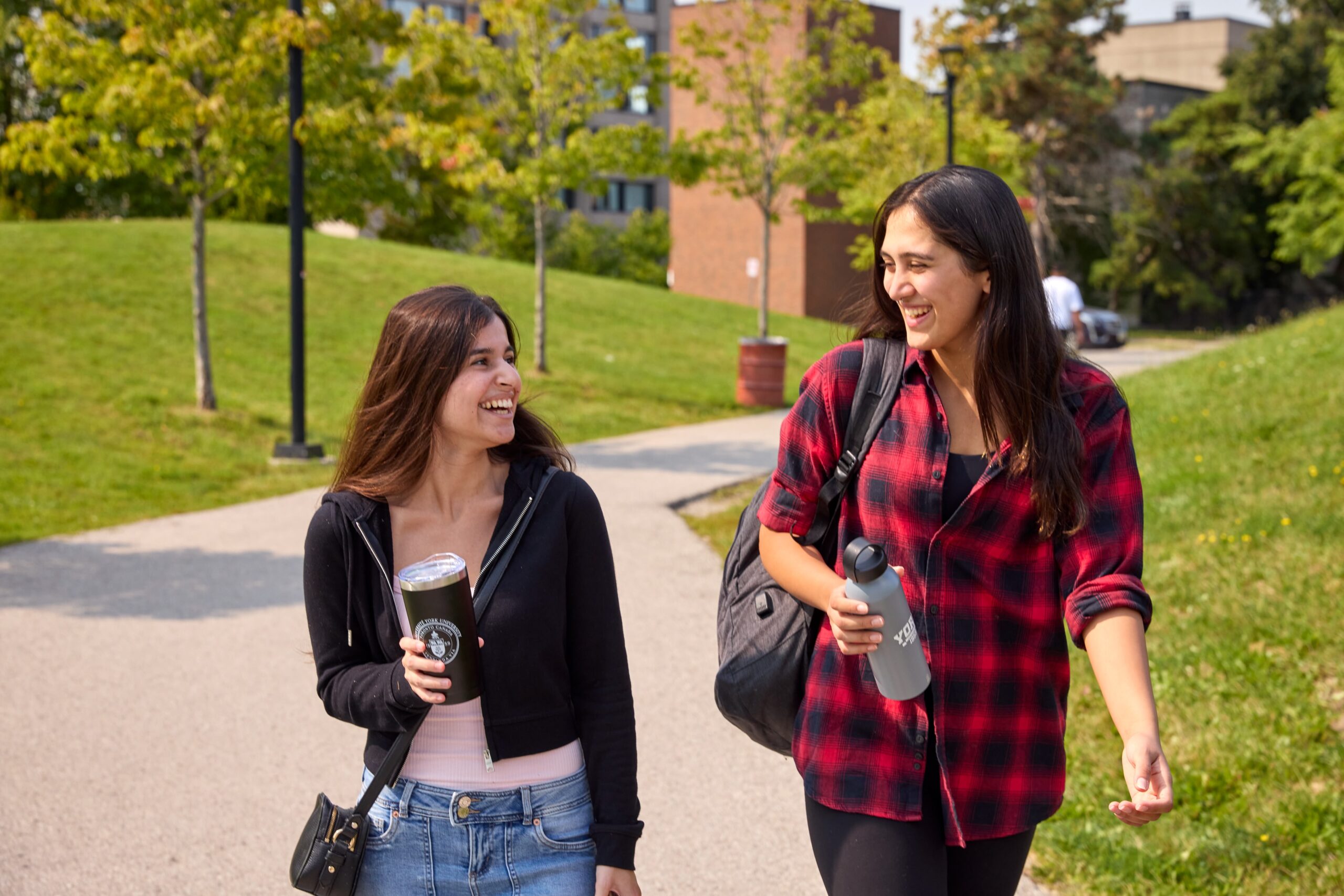
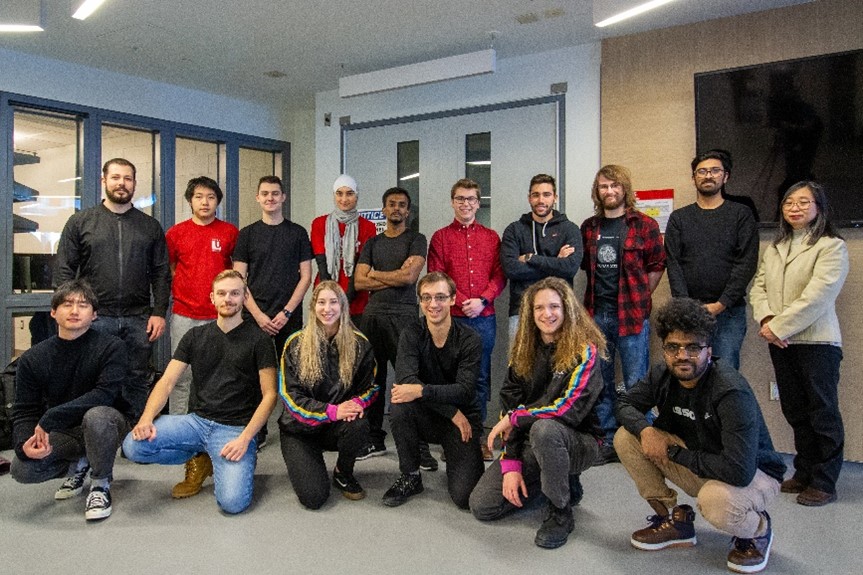
From day one, you’ll build friendships and connect with classmates through design projects, labs and fun, collaborative group work. You’ll learn alongside your peers, tackle challenges together and become part of a close-knit student community.
With up to 20 months of paid co-op, you can put your learning to work with leading organizations such as NASA, the Canadian Space Agency and MDA, while building industry connections and exploring where your degree could take you.
By graduation, you’ll be ready to step into a fast-growing industry where skilled talent is in demand. The global space economy is expected to nearly triple to US$1.8 trillion by 2035, opening up opportunities in satellites, spacecraft, robotics, communications and more.*
*World Economic Forum, in collaboration with McKinsey & Company, Space: The $1.8 Trillion Opportunity for Global Economic Growth, 2024.
Why Space Engineering at Lassonde
Engineering Block Model option
You can choose to start your journey in the Engineering Block Model, a first-year experience built to support both your learning and your sense of belonging. Instead of balancing 5–6 courses at once, the Block Model lets you focus on fewer subjects at a time. You’ll take one intensive course alongside a longer-term course, completing a course every few weeks.
From idea to impact
Have an idea that could make a difference? Through YSpace Lassonde, you’ll have access to mentorship, startup programs and a community that helps turn ideas into real ventures. Prophete Industries, a Lassonde student-founded startup, is doing just that, developing AI and autonomous technology that helps machines understand and navigate the world around them. Learn more about student ventures.
Get involved. Have fun.
With hundreds of student clubs across York and dozens of student-led organizations and design teams at Lassonde, there are plenty of ways to get involved. Build, test and improve your ideas alongside new friends through groups like York University Robotics Society, Lassonde Motorsport and Arbalest Rocketry. You can work on everything from robotic prototypes to Formula-style race cars and high-powered rockets. Learn more about our student clubs.
Hands-on learning & lab experiences
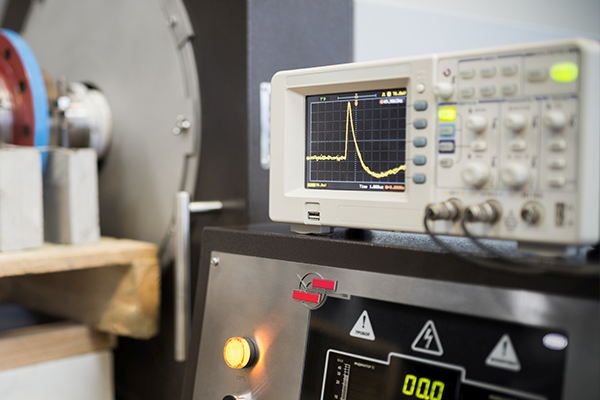
Vibration Testing Facility
Experience the complete testing process by using advanced vibration equipment to simulate the forces encountered during launch. You’ll learn how to assess the performance of components and systems, interpret test results and understand the critical role that environmental testing plays.
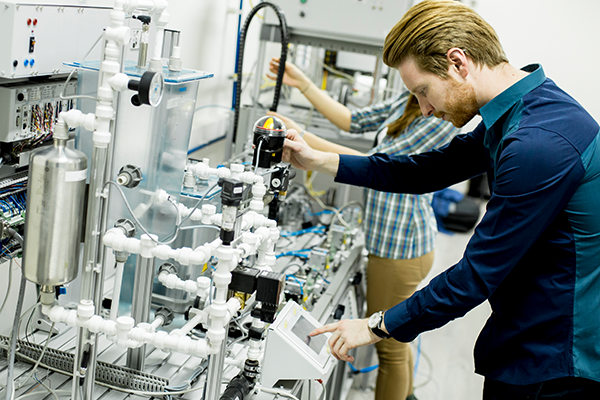
Control & Mechatronics Lab
Explore how spacecraft and aerospace systems maintain stability and precision. Using the Quanser AERO, a dual-motor experiment platform, students gain hands-on experience with real-time control systems, essential for spacecraft attitude control, drone navigation and robotic autonomy.

The Algonquin Radio Observatory
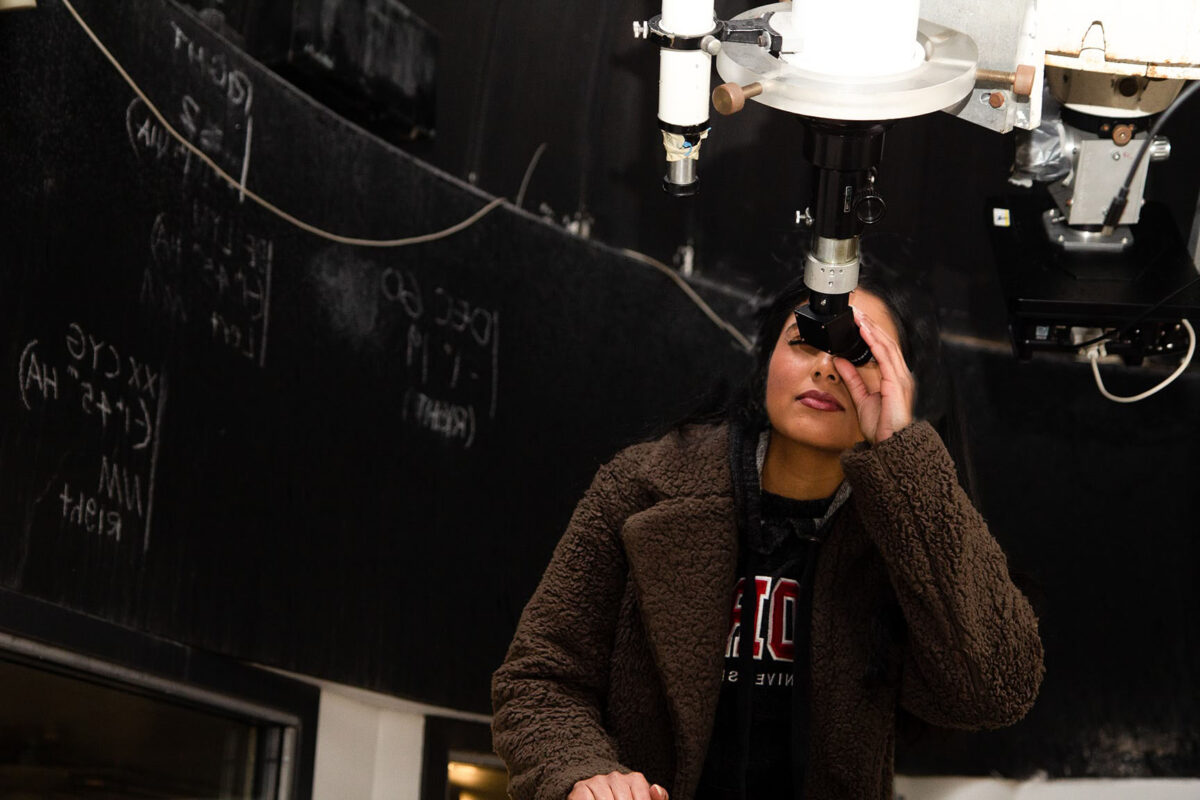
As part of their studies, 4th-year Space Engineering students use Canada’s largest fully steerable antenna to track GPS satellites, applying real-world techniques in satellite navigation and deep-space communication.
My goal is to make sure that my students have hands-on experience so they can graduate and do well in their career.
—Professor Regina Lee, Space Engineering, on supervising student teams who design and test CubeSat components for real satellite missions preparing for launch.

Work-integrated learning
Gain industry experience with paid work terms
Through Lassonde’s co-op program, co-op work terms begin after your second year, with students applying in year two. This makes first year an important time to build your academic foundation and technical skills.
From there, you’ll take on paid work terms across aerospace, space technology, robotics, defence, telecommunications and other sectors. With flexible 4, 8 or 12-month placements, you can design and test spacecraft systems, develop software for satellites, work with robotics and autonomous systems, analyze space mission data or build technologies designed to operate in challenging environments. You can tailor your experience to your goals while building hands-on engineering skills, expanding your professional network and exploring the space and engineering career path that interests you most, all while being supported at every step.
Notable co-op employers
- MDA
- Celestica
- Bombardier
- Pratt & Whitney Canada
- Sonex

500+

An average of $23/hr
Co-op employers
Work around the world

Launch your career in Space Engineering
Graduates of our program have secured careers with top space agencies, aerospace companies and cutting-edge startups.
Where our grads work
MDA
Guidance, navigation & controls engineer, electrical engineer
Magellan Aerospace
Logistics specialist, satellite engineer
General Dynamics
Electrical engineer, project manager
Kepler Communications
Technology engineer, systems analyst
Telesat Ottawa
Project coordinator, systems engineer
Loonify Space
Avionics specialist, industry analyst, project coordinator
Grad success stories
Why this career is future-proof
The opportunities are expanding quickly. Canada’s space workforce has grown almost 24% since 2019, yet 43% of space companies say they’ve had trouble finding qualified workers.* With 72% of jobs in the sector requiring STEM skills, a background that crosses engineering, software, AI, robotics and electronics can prepare you for opportunities in space and beyond.*
* Canadian Space Agency, State of the Canadian Space Sector Report 2025, 2025.
Learn from exceptional faculty
Learn from professors like Michael Daly, whose work on NASA’s OSIRIS-REx mission helped map the surface of asteroid Bennu and guide the spacecraft’s safe collection and return of asteroid samples. Or, Professor George Zhu, Director of York’s Space Engineering Design Laboratory, who is developing DESCENT, Canada’s first in-orbit demonstration of active debris removal.
Important information for applicants
Course details
Sample schedules
Space Engineering (B.Eng)
Year One Common Core
Fall Term
• Class • Lab • Tutorial
Mon
Mechatronics System Design & Implementation I
Object-Oriented Programming & Telemetry
Computational Thinking Through Procedural Programming and Mechatronics
Engineering Mechanics
Tues
Applied Calculus I
Object-Oriented Programming & Telemetry
Renaissance Engineer 1: Ethics, Communication & Problem Solving
Wed
Mechatronics System Design & Implementation I
Computational Thinking Through Procedural Programming and Mechatronics
Engineering Mechanics
Thurs
Applied Calculus I
Renaissance Engineer 1: Ethics, Communication & Problem Solving
Fri
Computational Thinking Through Procedural Programming and Mechatronics
Engineering Mechanics
Engineering Mechanics
Space Engineering (B.Eng)
Year One Common Core
Winter Term
• Class • Lab • Tutorial
Mon
Applied Calculus II
Chemistry & Materials Science for Engineers
Electricity, Magnetism & Optics for Engineers
Applied Linear Algebra
The Earth Environment
Electricity, Magnetism & Optics for Engineers
Tues
Chemistry & Materials Science for Engineers
Renaissance Engineer 2: Engineering Design Principles
The Earth Environment
Wed
Applied Calculus II
Electricity, Magnetism and Optics for Engineers
Applied Linear Algebra
The Earth Environment
Thurs
Chemistry & Materials Science for Engineers
Renaissance Engineer 2: Engineering Design Principles
Fri
Applied Calculus II
Chemistry & Materials Science for Engineers
Electricity, Magnetism and Optics for Engineers
Applied Linear Algebra
Electricity, Magnetism and Optics for Engineers
Space Engineering (B.Eng)
Year Two Common Core
Fall Term
• Class • Lab • Tutorial
Mon
Introductory Probability and Statistics
Applied Multivariate and Vector Calculus
Computational Methods for Space Engineering
Engineering and the Environment
Tues
Introduction to Continuum Mechanics
Engineering Graphics & CAD Modeling
Engineering Graphics & CAD Modeling
Wed
Introductory Probability and Statistics
Applied Multivariate and Vector Calculus
Introduction to Continuum Mechanics
Engineering and the Environment
Thurs
Introduction to Continuum Mechanics
Engineering Graphics & CAD Modeling
Introductory Probability and Statistics
Fri
Introductory Probability and Statistics
Applied Multivariate and Vector Calculus
Computational Methods for Space Engineering
Computational Methods for Space Engineering
Space Engineering (B.Eng)
Year Two Common Core
Winter Term
• Class • Lab • Tutorial
Mon
Different Equations for Scientists and Engineers
Planetary Geophysics
Tues
Planetary Geophysics
Dynamics
Introduction to Continuum Mechanics
Engineering Projects: Management, Economics and Safety
Wed
Different Equations for Scientists and Engineers
Dynamics
Thurs
Planetary Geophysics
Dynamics
Introduction to Continuum Mechanics
Engineering Projects: Management, Economics and Safety
Fri
Different Equations for Scientists and Engineers
Introduction to Continuum Mechanics
Space Systems Engineering
Looking for more? Browse upper-year courses
Connect with Us
Join a community of change makers. Join Lassonde.