

Mechanical Engineering
Bachelor of Engineering (BEng)
Accredited by the Canadian Engineering Accreditation Board
Create next-generation mechanical systems
Entry in: Fall and Winter
Tackle real challenges
Learn by doing through labs, workshops, co-ops
Program overview
Mechanical Engineering is for students who are curious about how things work and excited to build what’s next. From designing smarter products and advanced manufacturing systems to developing sustainable energy solutions and intelligent technologies, mechanical engineers create the systems that keep our world moving.
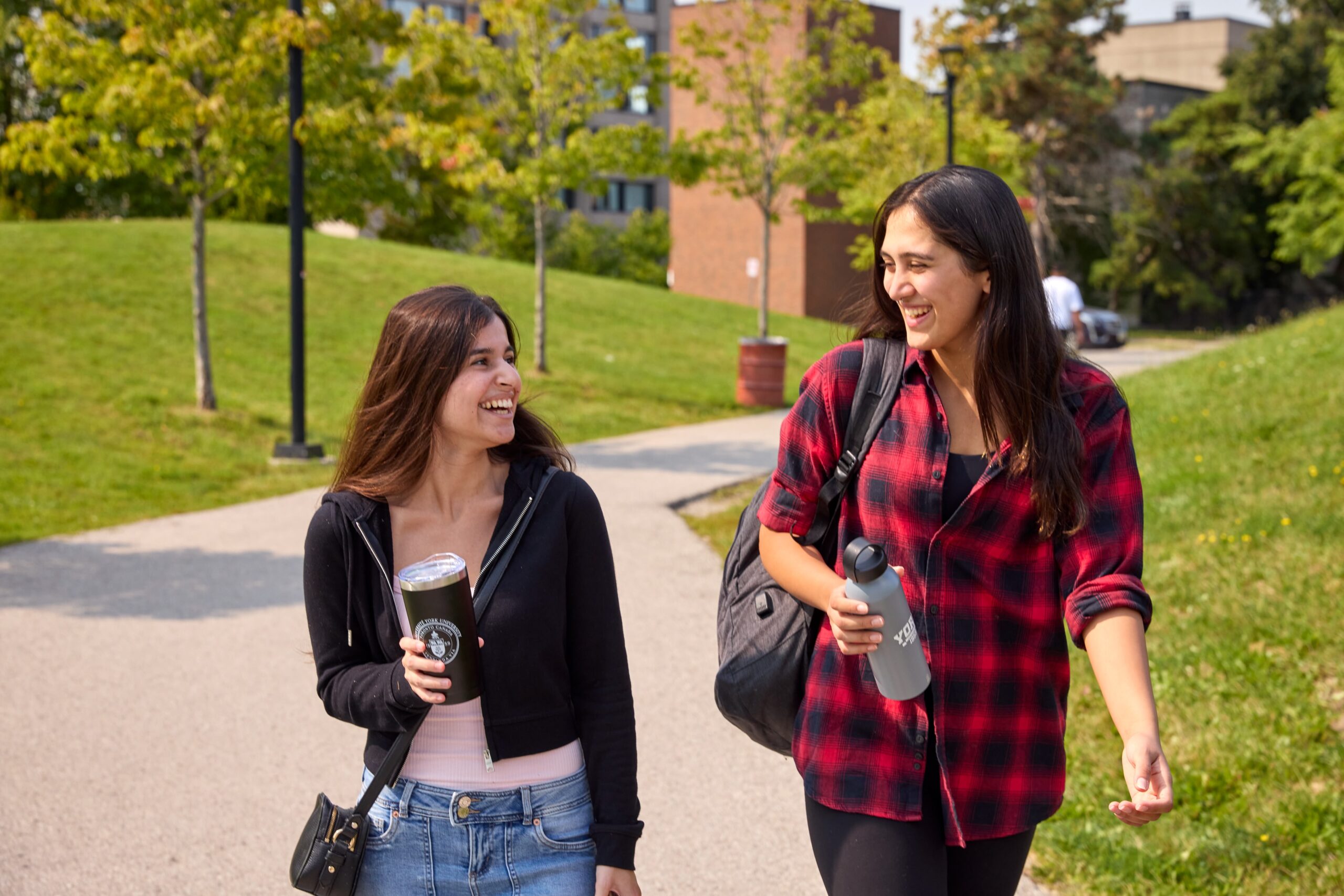
From your first year, you’ll join a community of curious, motivated students who share your passion for solving problems. Through hands-on projects, collaborative learning and real-world challenges, you’ll build practical skills while forming lasting friendships. Whether you’re working in labs, studying with classmates or getting involved in student groups, you’ll find opportunities to learn, grow and belong.
As you progress through the program, you’ll explore everything from robotics and advanced manufacturing to energy systems, machine design and intelligent technologies. Students discover how tools like artificial intelligence are helping engineers design smarter products, analyze complex systems and accelerate innovation.
More than just a degree, Mechanical Engineering is a place to find your community, creating connections that support your success both inside and outside the classroom. It offers opportunities for co-op and real-world experience that open doors, spark innovation and prepare you to make a lasting impact in the world.
Why Mechanical Engineering at Lassonde
Integrating AI into modern solutions
Students are at the centre of learning, working directly with AI experts whose research and real-world projects shape every course experience. In collaboration with faculty, you’ll apply artificial intelligence to real-world challenges and develop advanced technologies.For example, Mechanical Engineering student Garnet Maxwell developed an AI-powered drone that maps urban litter, enabling faster and more precise waste management.
Engineering Block Model option
You can choose to start your journey in the Engineering Block Model, a first-year experience built to support both your learning and your sense of belonging. Instead of balancing 5–6 courses at once, the Block Model lets you focus on fewer subjects at a time. You’ll take one intensive course alongside a longer-term course, completing a course every few weeks.
Powered through collaboration
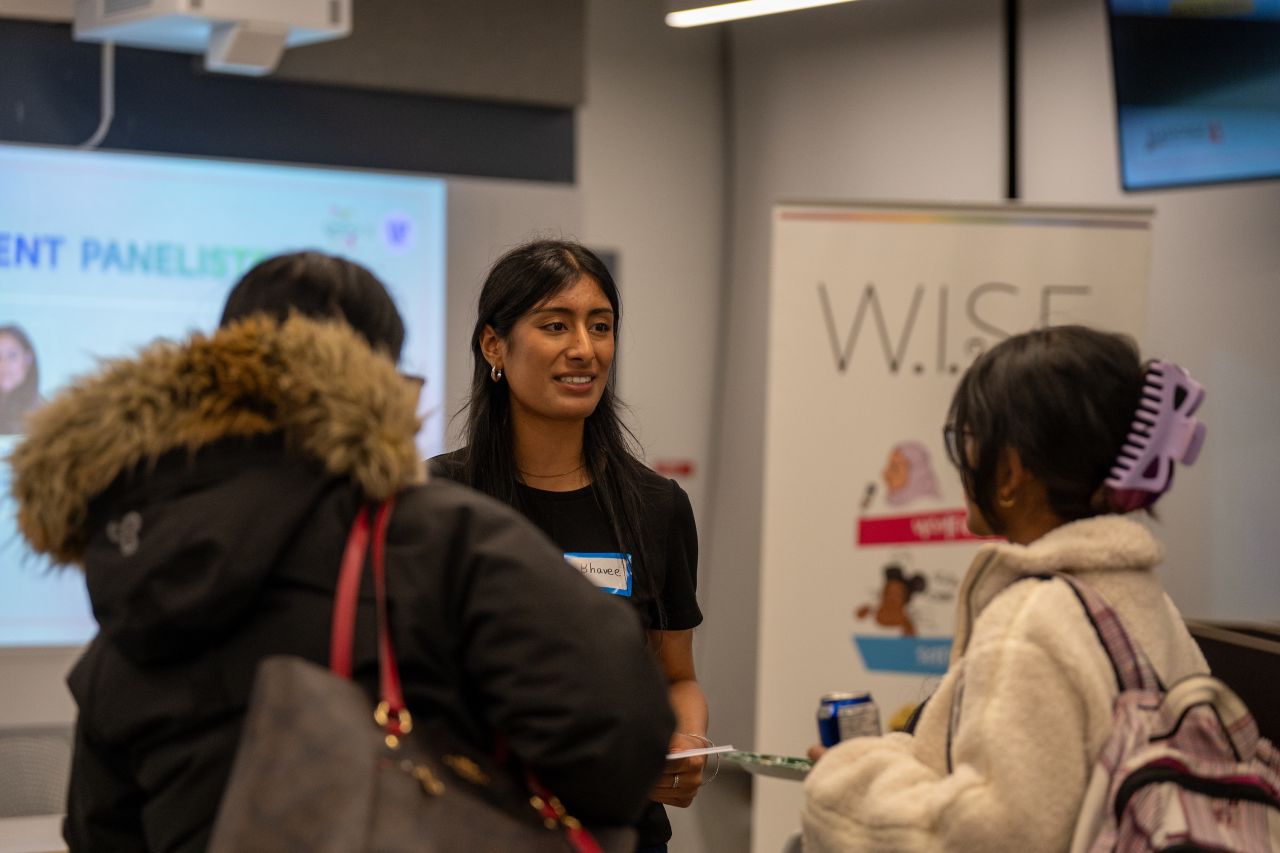
We put cooperation at the core of everything we do. You’ll develop strong communication and teamwork skills while working across disciplines, learning how to design solutions where multiple technologies and groups come together. Because the future of AI is not built in isolation, it is built by engineers who can connect ideas, systems and people. Learn more about our student clubs and organizations.

Hands-on learning & lab experiences
High Bay Lab
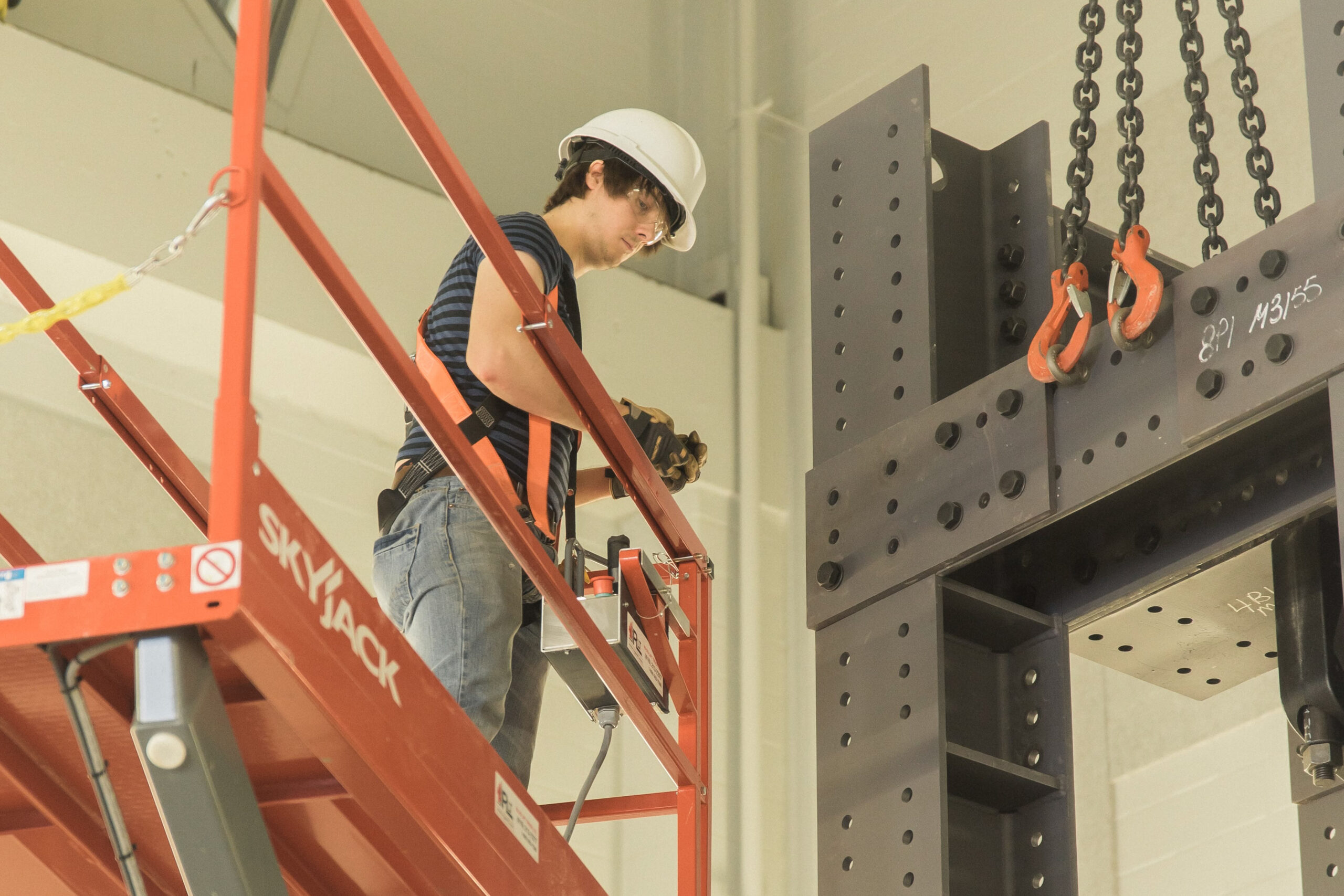
The High Bay Lab is a multi-storey structural testing facility designed for large-scale materials and structural research. Built to withstand earthquake-level forces, the lab features a metre-thick floor, vibration-controlled walls and professional-grade testing and prototyping equipment, including a 12.5-ton overhead crane.
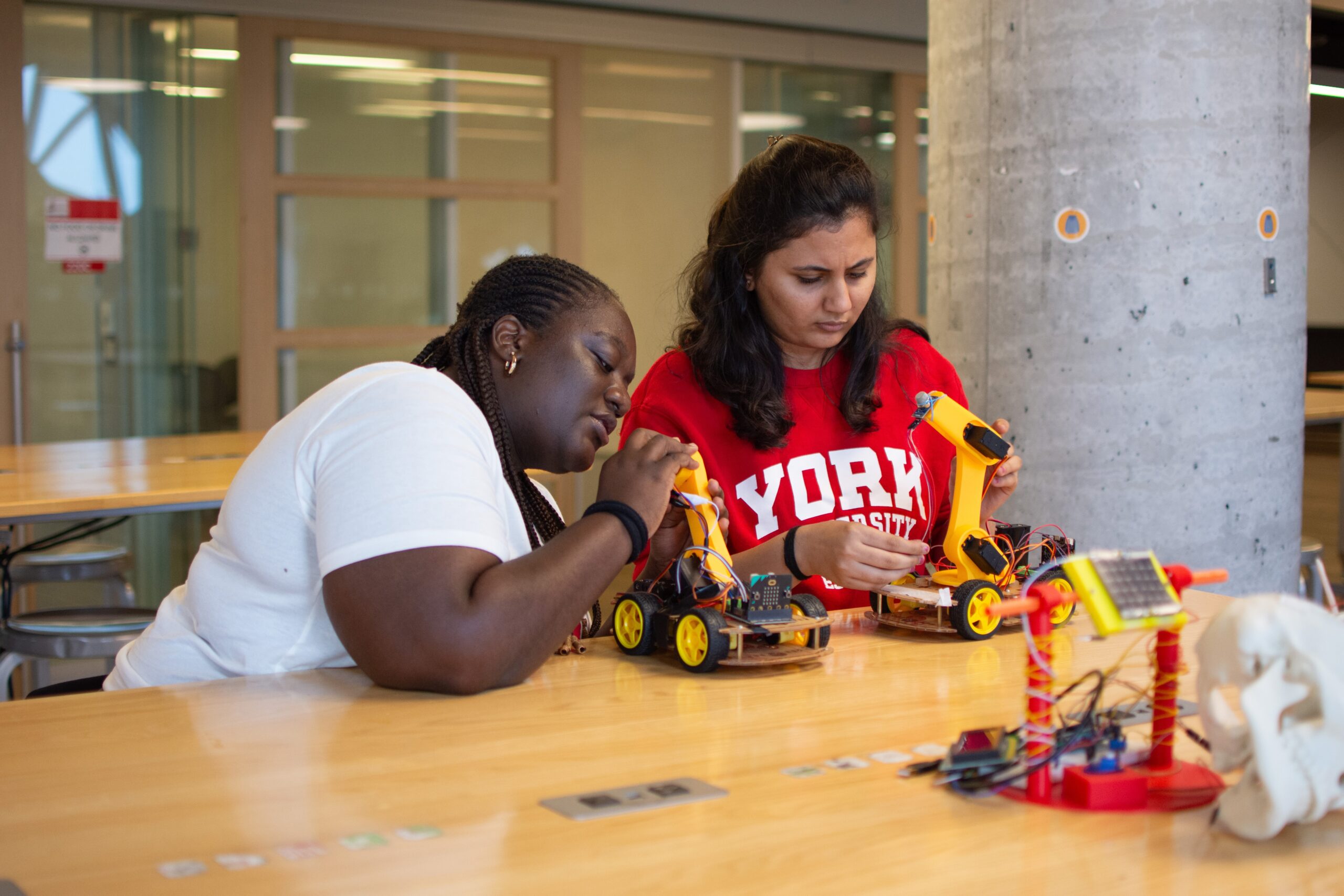
The Sandbox
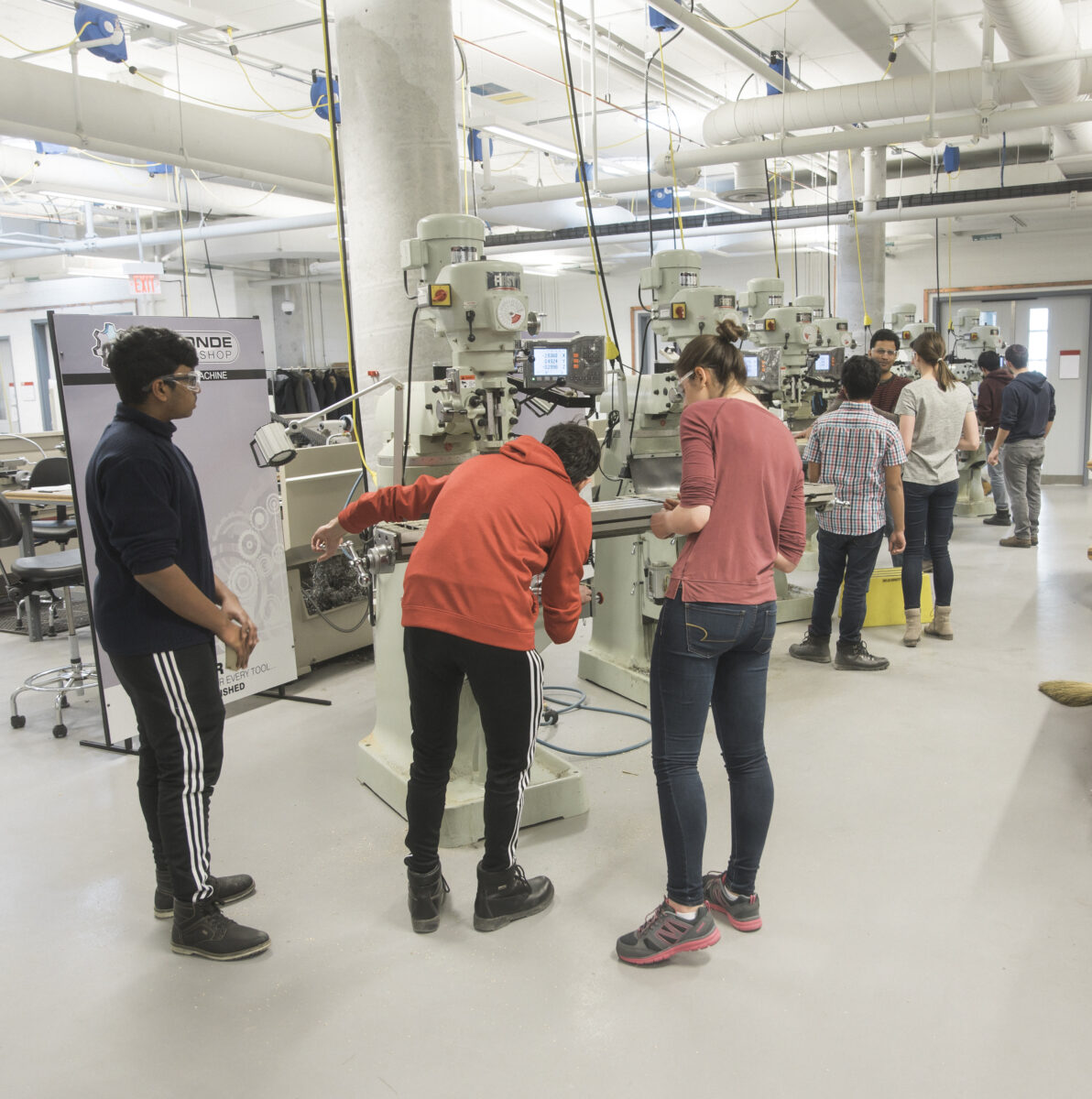
The Sandbox puts students at the center of hands-on creation and collaboration inside the Bergeron Centre. With access to tools like 3D printing, laser cutting and dedicated team spaces, students can quickly prototype, test and refine their ideas. It’s an environment built for experimenting, building and learning.
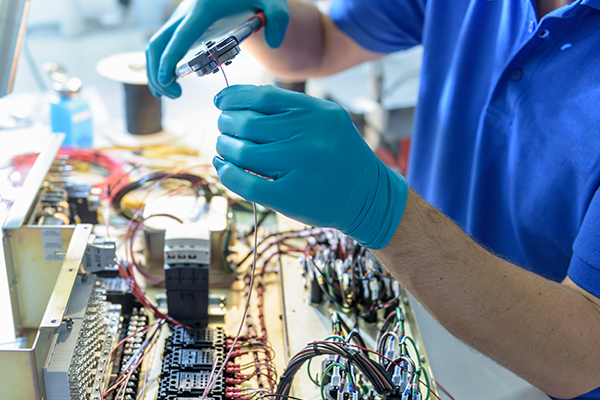
The Power Systems Support Lab
Used in courses focused on power engineering, distributed energy networks and sustainable energy systems, this lab provides hands-on experiences using industry-standard power measurement tools and workstations to analyze, test and manage real-world electrical power systems.
The future of design is the integration of artificial intelligence and generative methods to improve creativity, efficiency, and productivity in engineering.
— Dr.Alidad Amirfazli, Professor, Mechanical Engineering, Lassonde School of Engineering, York University

Work-integrated learning
Gain industry experience with paid work terms
Through Lassonde’s co-op program, co-op work terms begin after your second year, with students applying in year two. This makes first year an important time to build your academic foundation and technical skills.
From there, you’ll take on paid work terms across technology, finance, public service, research, and other areas where computer science plays a key role. With flexible 4, 8 or 12-month placements, you can tailor your experience to your goals while building in-demand skills, growing your network, and exploring what excites you most about your future career, all while being supported at every step.
Notable co-op employers
- Suncor Energy
- General Motors of Canada
- Sanofi Pasteur
- Siemens
- Ontario Power Generation

500+

An average of $26/hr
Co-op employers
Work around the world

Launch your career in the Mechanical Engineering
In demand across every industry
Graduates of our program have gone on to build careers across all sectors, including healthcare, finance, government, transportation, manufacturing and tech.
Where our grads work
Cimco Refrigeration
Project engineering designer, product design engineer
Rycom
Building systems analyst, process engineer
Zebra Technologies
Mechanical engineer, manufacturing engineer
JRBS Machine & Lasercut Fab Inc.
Design engineer, compliance engineer
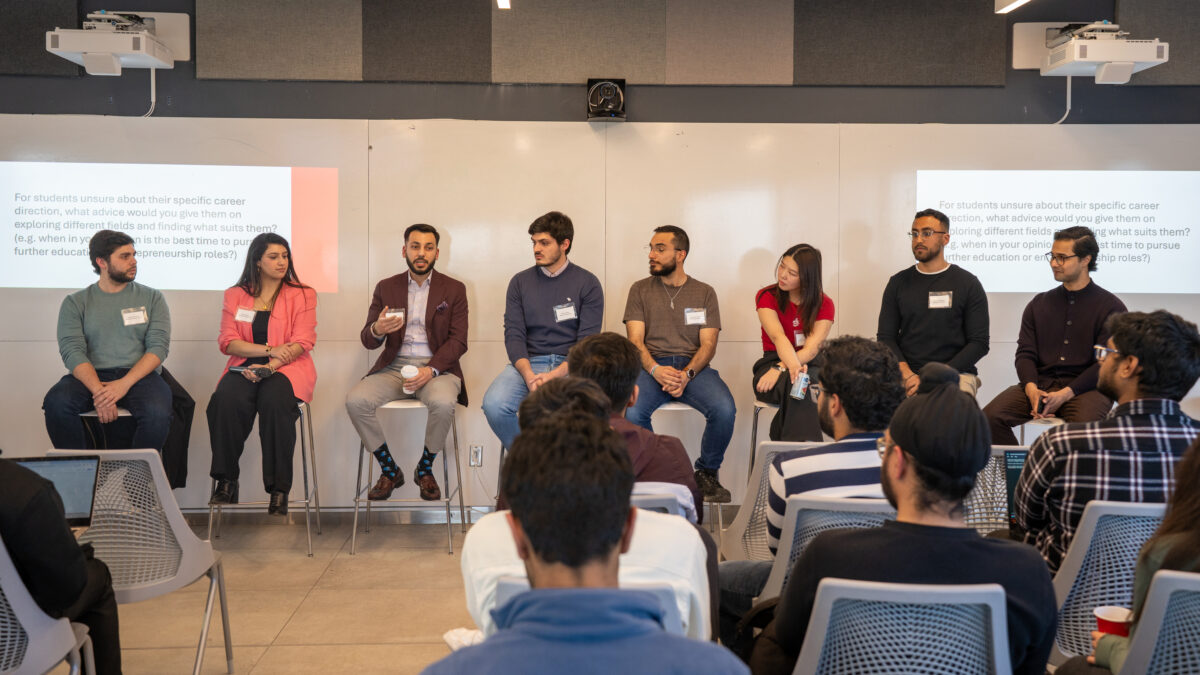
Why this career is future-proof
As a future mechanical engineer, you’ll be entering a field with strong long-term demand with 29% of Canada’s mechanical engineering workforce aged 50 or older and approaching retirement, opportunities for you to continue growing. Combined with emerging technologies like artificial intelligence, you’ll be well positioned to tackle complex challenges, drive innovation and help build the communities of tomorrow.
Learn from exceptional faculty
You’ll learn from professors whose work extends far beyond the classroom. Whether they are advancing sustainable technologies, driving engineering innovation or exploring solutions in space, they bring real-world research directly into your education. Faculty members like Professor George Zhu have led projects such as DESCENT, Canada’s first in-orbit demonstration of active debris removal technology, giving you a front-row seat to innovation in action.
You’ll also learn from Professors Pouya Rezai, Thomas Cooper, Cuiying Jian, Roger Kempers, Siu Ning Leung, Nima Tabatabaei and Razieh Salahandish, who are leading a NSERC-funded research project focused on developing new ways to detect, extract and recycle lithium from electronic waste and used batteries, helping build more sustainable recovery systems.
Important information for applicants
Course details
Sample First-Year Schedules
Mechanical Engineering (B.Eng)
Year One Common Core
Fall Term
• Class • Lab • Tutorial
Mon
Applied Linear Algebra
Computational Thinking Through Procedural Programming & Mechatronics
Engineering Mechanics
Engineering Mechanics
Tues
Applied Calculus I
Renaissance Engineer 1: Ethics, Communication & Problem Solving
Wed
Applied Linear Algebra
Computational Thinking Through Procedural Programming & Mechatronics
Engineering Mechanics
Thurs
Applied Calculus I
Computational Thinking Through Procedural Programming & Mechatronics
Renaissance Engineer 1: Ethics, Communication & Problem Solving
Fri
Applied Linear Algebra
Engineering Mechanics
Engineering Mechanics
Mechanical Engineering (B.Eng)
Year One Common Core
Winter Term
• Class • Lab • Tutorial
Mon
Applied Calculus II
Electricity, Magnetism and Optics for Engineers
Chemistry and Materials Science for Engineers
Discrete Mathematics for Engineers
Tues
Chemistry and Materials Science for Engineers
Renaissance Engineer 2: Engineering Design Principles
Object-Oriented Programming & Telemetry as Engineering Cornerstones
Wed
Applied Calculus II
Electricity, Magnetism and Optics for Engineers
Discrete Mathematics for Engineers
Discrete Mathematics for Engineers
Thurs
Chemistry and Materials Science for Engineers
Electricity, Magnetism and Optics for Engineers
Renaissance Engineer 2: Engineering Design Principles
Fri
Applied Calculus II
Electricity, Magnetism and Optics for Engineers
Electricity, Magnetism and Optics for Engineers
Chemistry and Materials Science for Engineers
Object-Oriented Programming & Telemetry as Engineering Cornerstones
Connect with Us
Join a community of change makers. Join Lassonde.